Continent Today prints one label for each cross-border instrument the desk has checked: a tariff schedule, a directive, a treaty annex, a joint decision. The label carries the issuing body, the document number, the date it takes effect, and the way it can fail. Anything short of that stays in the notebook.
The blank fields are the point. Nothing is printed until a checker has matched the document to its annex and found the date that makes it apply.
Fig. 1 / the desk before the run
Issued by
Customs union council
Instrument
Tariff schedule, annex II
Effective
Set by a separate commencement notice
Caution
Line numbers move between revisions
The tariff schedule is not the date
A tariff schedule lists the lines and the rates, and it is usually published months before it applies. The commencement notice is a separate document, often a single paragraph, and its date can move. When a port asks which rate applies on a given morning, the answer sits in the notice, not in the schedule. The desk checks both and prints the effective date on the label. Where no notice exists, the field reads pending and the item does not run.
Checked 06:14File / customs, annex II
Issued by
Regional assembly
Instrument
Directive, transposition required
Effective
Two years after adoption, if transposed
Caution
Transposition tables lag the text
A directive is a deadline for member states
Assemblies adopt text. Member states write it into national law, and each state files a table showing which article it used. The gap between adoption and transposition is where most coverage goes wrong, because the directive is law for the union and only a promise for the household.
Issued by
Joint ministerial meeting
Instrument
Communique, paragraph 14
Effective
No legal date
Caution
Read the verbs, not the adjectives
When a communique is only a promise
Ministers leave a meeting and read out a paragraph that sounds binding. The verb decides. A promise to review is not a commitment to adopt, and neither carries a date that a customs officer can apply.
Counter notes
What the desk counts as an instrument
A document number that a reader can cite
An issuing body with legal personality
A commencement, ratification or transposition date
An annex that carries the operational detail
A treaty arrives with a ratification calendar that no secretariat publishes in one place. The desk keeps its own: signature date, depositary, instruments lodged, and the threshold written into the text. A treaty that needs sixty instruments and has forty is not in force, whatever the closing statement at a summit says. The United Nations Treaty Collection is the reference for depositaries; regional counts come from the secretariat that holds the file.
Schedules and annexes carry the numbers that decide a shipment. A tariff line, a rule of origin, a quota volume: these live in the annex, and the annex is revised on its own timetable. The WTO tariff database is useful for comparing rates across members, but it will not tell you which revision applied on a particular morning. For that, the commencement notice is the only document that counts.
Communiques sit outside the register, and the desk still reads them, because the language sets what officials believe they agreed to. A minister who says the group will align standards by 2028 has made a statement about intent. The same sentence with a date and a named body becomes something a lawyer can use. The difference is worth printing.
The check is physical before it is published: text, annex, date, then the stamp.
Register of instrument types
Type
When it binds
What to check
Treaty
Binds after the ratification threshold
Check depositary notifications, not summit statements
Directive
Binds after national transposition
Check the transposition table for each state
Schedule
Binds on the commencement notice
Check the revision number and the annex line
Communique
Does not bind
Check the verbs against the agreed agenda
Treaty
Binds after the ratification threshold. Check depositary notifications, not summit statements.
Directive
Binds after national transposition. Check the transposition table for each state.
Schedule
Binds on the commencement notice. Check the revision number and the annex line.
Communique
Does not bind. Check the verbs against the agreed agenda.
Standing cautions
Repeated because readers keep missing them
Commencement notices move. A schedule printed in June can start in October and be amended again in November.
Ratification counts are political. A depositary count records instruments lodged, not laws passed by a parliament.
Annex line numbers shift between revisions. Cite the revision and the line, or the citation will not survive the next printing.
Translation can change an obligation. When the English and French texts disagree, both readings belong in the note.
Bodies on the run
Six continental bodies, read every week
The list is short on purpose. Each body publishes a different mix of instruments, and the desk tracks the ones that produce dates a court or a customs officer can apply.
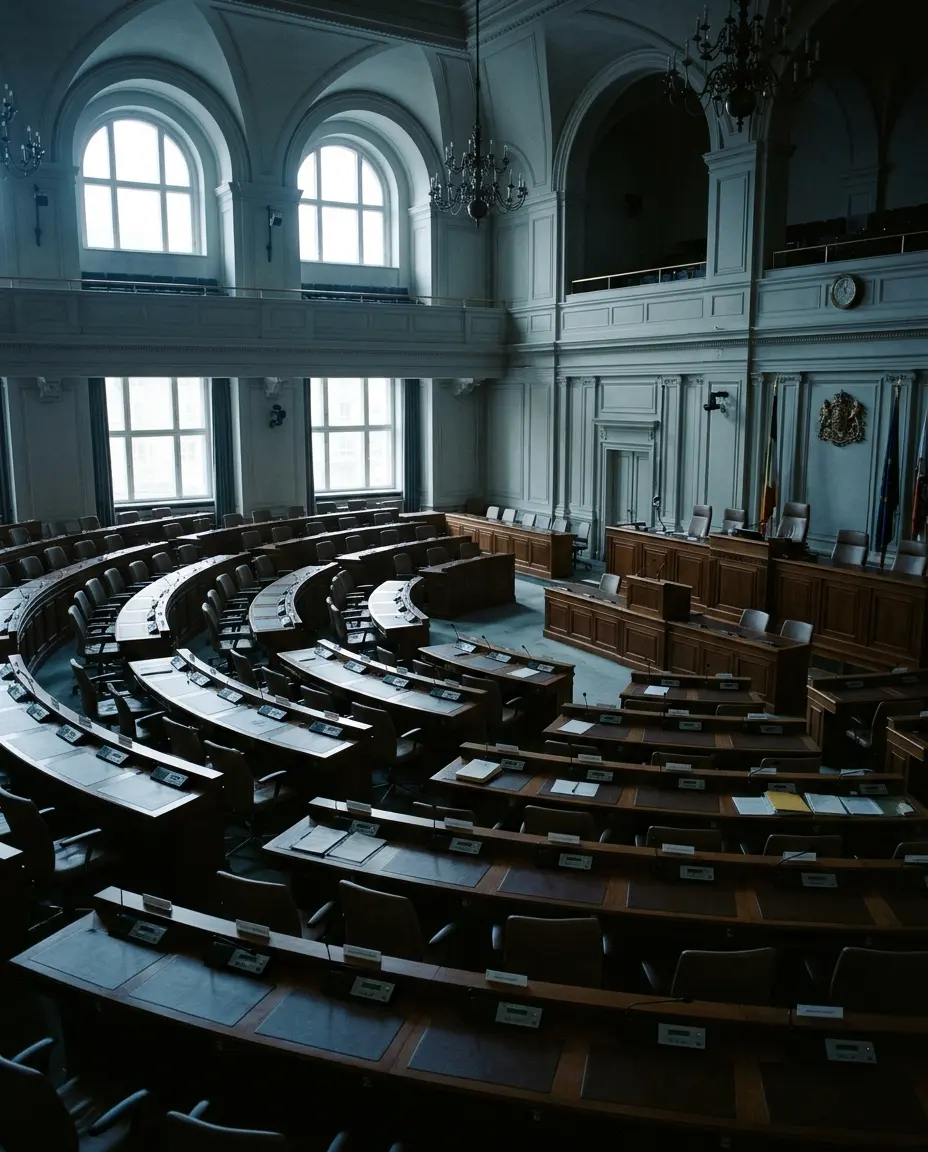
A chamber before the session. What gets adopted here still has to be written into national law before anyone can use it.
A corrected label keeps its original date and shows the change in the margin. Send the document, the annex or the commencement notice through the desk and it will be checked against the issuing text.